250 Years of American Retail: From Handwritten Ledgers to AI Forecasting
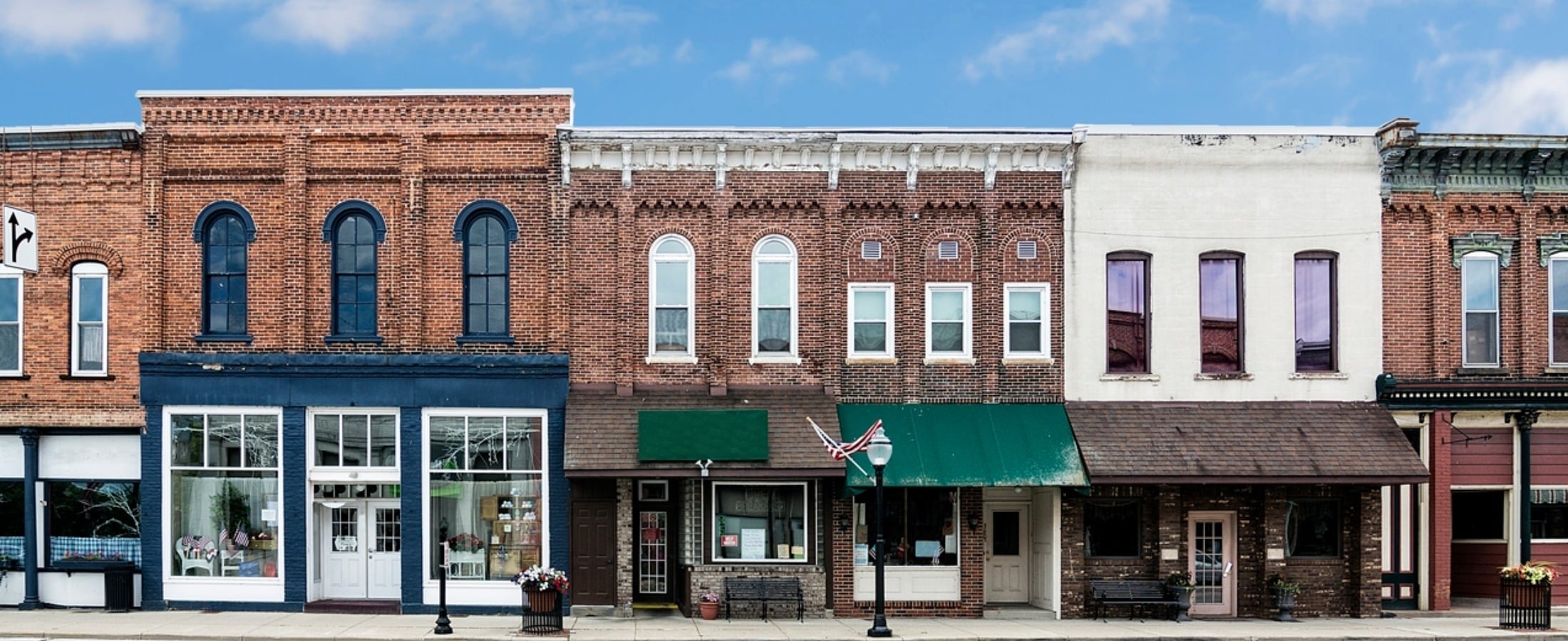
Two hundred fifty years ago, there were no barcode scanners, loyalty apps, or online orders waiting to be picked up curbside.
There weren't even cash registers.
If you wanted to buy something, you walked into the local general store, chatted with the owner, and hoped they had what you needed sitting somewhere on the shelf. If they didn't? Maybe next month. Maybe not.
A lot has changed since then.
As America celebrates its 250th birthday, it's fun to look back at how retail has grown right alongside the country. The stores may look completely different today, but one thing has stayed surprisingly consistent: successful retailers have always found ways to better understand their customers and keep the products they want in stock.
The tools have changed. The mission hasn't.
The General Store Era: When Your POS Was a Pencil
Long before loyalty programs and inventory dashboards, there was the neighborhood general store.
Walk in looking for flour, lamp oil, nails, or maybe a new pair of boots, and chances are you'd be greeted by someone who already knew your name.
But behind that familiarity was a very paper-heavy operation. Sales were often recorded in handwritten account books that tracked purchases, credits, and outstanding balances. In many early American communities, these ledgers weren’t just records — they were the entire operating system. (ResearchGate: Merchant Account Books study)
And the personal touch behind the system worked because the stores were small. When you only stocked a few items and served one community, you could realistically run a business with a notebook, a steady hand, and a good memory.
As America expanded westward and communities grew, so did retail.
Retailers needed better systems.
Bigger Stores, Bigger Problems
The late 1800s brought something many shoppers had never experienced before: enormous stores filled with products from all over the country — and eventually, the world.
While the Sears catalog introduced mail-order retail, department stores like Macy's and Marshall Field's turned shopping into an experience. Fixed prices replaced haggling, elaborate window displays drew crowds inside, and shoppers could browse entire departments instead of asking a clerk to retrieve items from behind a counter. Historians often describe department stores as some of the first modern retail destinations. (Britannica)
Of course, selling thousands of products created a brand-new headache. How do you know what's selling, what needs to be reordered, or what's been sitting on the shelf for months? Retailers began relying on more structured bookkeeping, purchasing processes, and inventory records to stay organized.
Then, in 1879, a saloon owner named James Ritty grew frustrated that employees kept helping themselves to the cash drawer and invented the mechanical cash register. It wasn't created to make checkout faster — it was built to answer one simple question: "Where did all the money go?" (Britannica)
Some retail problems never really disappear.
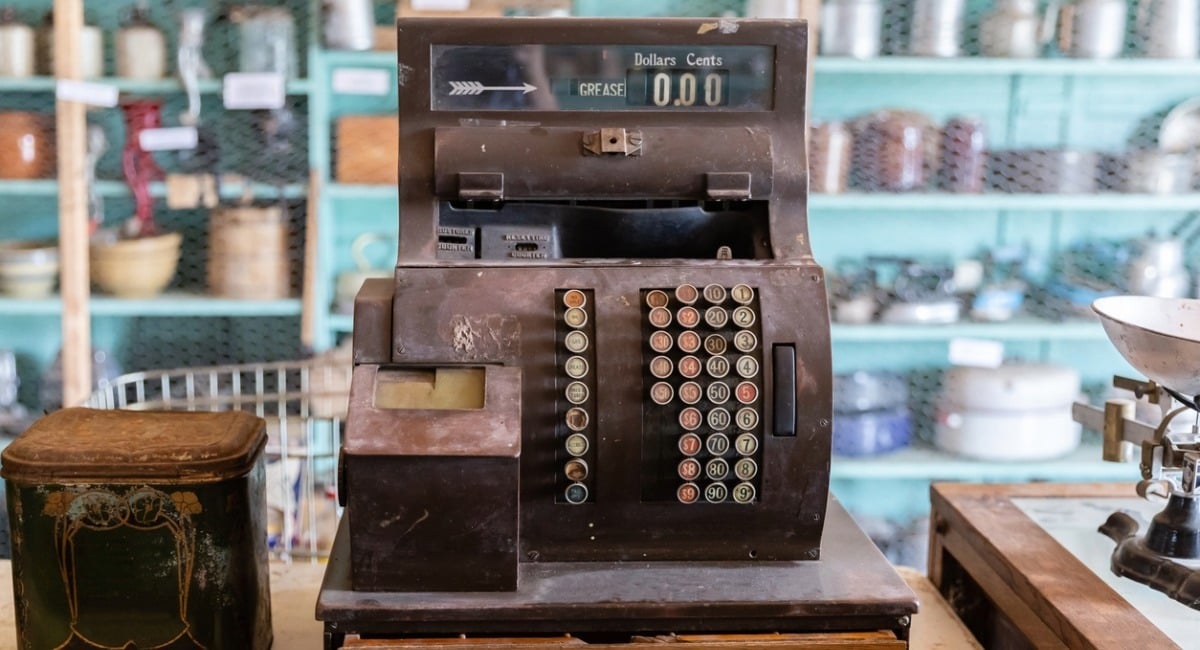
Above: Ritty's invention of the cash register was the start of real innovation in retail technology.
Retail Goes National
By the early and mid-1900s, retail had become much bigger than Main Street. Railroads, highways, and improved distribution networks allowed retailers to reach customers across the country. National chains grew rapidly, shopping centers became community gathering places, and eventually malls reshaped the American shopping experience.
Managing one store was challenging enough. Managing ten — or a hundred — was something entirely different. Retailers now needed consistent pricing, centralized purchasing, better inventory visibility, and standardized operations.
This is also when technology began moving into the back office. Mechanical registers gave way to electronic systems, early cash register computers started replacing stacks of paperwork, and inventory became something retailers could actually measure instead of estimate. (History Tools)
The tools were changing, but the questions weren't. Retailers still wanted to know what customers were buying, what they should order next, and whether they'd have enough inventory to meet demand.
The Digital Commerce Era
Then came the internet.
Retailers suddenly had a second storefront. Eventually a third. Then mobile apps, online marketplaces, social commerce, curbside pickup, and buy online, pick up in-store all became part of the job.
Customers didn’t care how many systems were working behind the scenes — they simply expected everything to work. In the early days of the internet, shoppers were generally more forgiving of clunky eCommerce experiences. Over time, however, expectations changed. If a product was listed as "In Stock" online, customers expected it to actually be available. Loyalty points needed to follow them wherever they shopped, and customer service representatives were expected to know what they had purchased yesterday, regardless of the channel.
Selling products wasn't the hard part anymore. Keeping every sales channel connected was. Many retailers ended up stitching together separate systems for inventory, point-of-sale, eCommerce, marketing, scheduling, and reporting. It got the job done... but not always gracefully.
The Unified Commerce & AI Era
Today's retailers aren't looking for more software — they're trying to make the software they already use work together.
After years of adding separate tools for point-of-sale, inventory, eCommerce, loyalty, marketing, fulfillment, and reporting, many businesses have discovered that disconnected systems create as many problems as they solve. Inventory gets out of sync. Customer information lives in different places. Employees spend time jumping between programs instead of helping shoppers.
That's why unified commerce has become such a major focus across retail. Instead of treating every sales channel like its own business, retailers are increasingly connecting everything into a single ecosystem where inventory, customer data, and operations stay in sync.
AI is quickly becoming part of that evolution, too. Rather than replacing retail expertise, it's helping merchants forecast demand, identify buying patterns, and make better inventory decisions before small issues become expensive ones. Just like every major retail innovation before it, these tools aren't changing what retailers are trying to accomplish — they're simply giving them better information to do it.
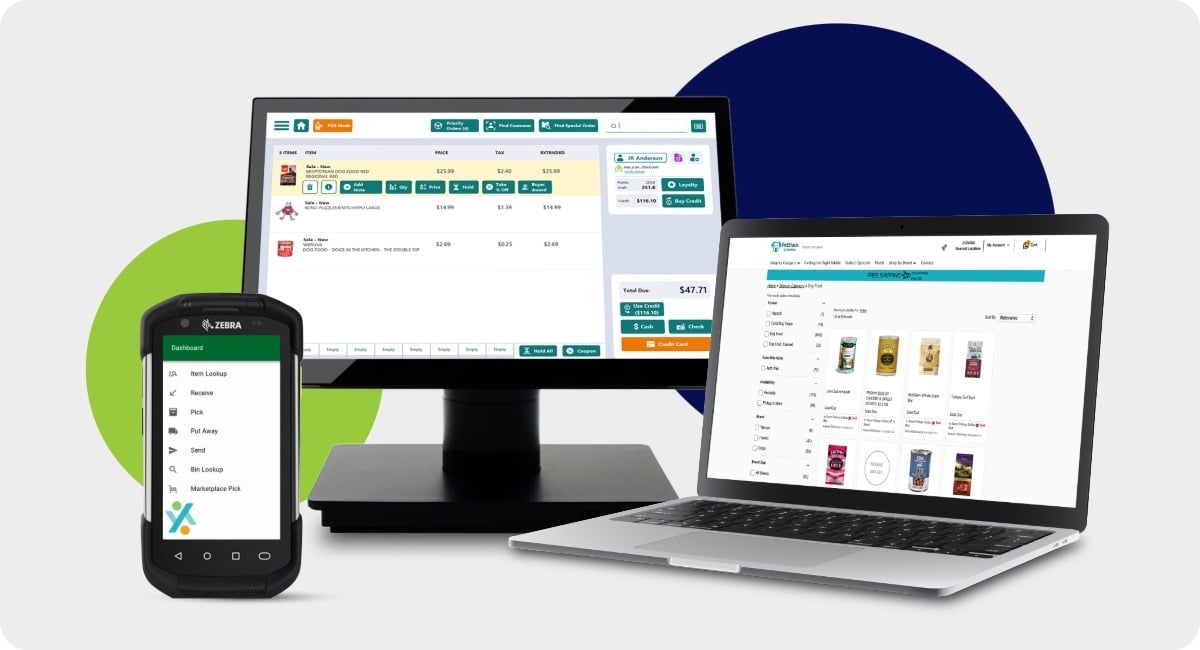
Above: In the AI and unified commerce era of today, retailers rely on connected systems like FieldStack to help run their operations.
What 250 Years of US Retail Has Taught Us
Looking back, it’s amazing how much retail has changed (and how much it hasn’t).
We went from handwritten ledgers to cash registers. From paper inventory logs to barcode scanners. (Fun fact: the first UPC barcode ever scanned was a pack of Wrigley's Juicy Fruit gum at a grocery store in Ohio in 1974, and that pack of gum now lives in the Smithsonian.) (History Channel)
Today, retailers have access to cloud-based inventory systems, real-time analytics, and AI-powered forecasting — tools that would have seemed impossible just a few decades ago.
But underneath all that technology, the job is remarkably familiar.
Whether you were running a general store in the early 1800s or managing multiple locations today, success has always come down to understanding your customers, stocking the products they really want, and adapting as shopping habits change.
That's probably the biggest lesson from the last 250 years of retail. The businesses that thrive aren't necessarily the ones with the newest technology — they're the ones that embrace change when customers expect something new.
If history is any indication, the next chapter of retail is already being written. And if the last 250 years are any guide, it probably won't look like anything we expect.
Competing in Today’s Retail Environment
Retail today moves faster than ever.
More channels. More data. More complexity. And more pressure to keep it all working together in real time.
Every era of retail has had its version of this same challenge. It just used to look like handwritten ledgers, cash drawers, and paper reports instead of disconnected systems spread across different tools.
As retail has evolved, the need for everything to stay connected in one place has only become more important.
FieldStack brings POS, inventory, eCommerce, and customer data together in one connected system — so retailers can see what’s happening across their business without stitching together multiple tools or chasing down conflicting reports.